
B25001 I By M. Faisal Hossain, BPharm, MPharm, PhD
What is Maca Root?
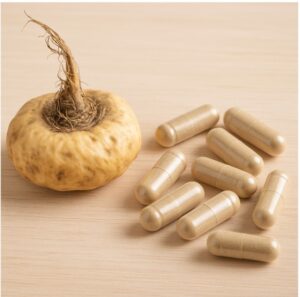
Maca (Lepidium meyenii) is a plant native to the high Andes of Peru, traditionally cultivated for over 2000 years. Locals have eaten maca as a food source and used it as a natural remedy for centuries. The edible root, often called “Peruvian ginseng,” is rich in nutrients and bioactive compounds believed to support:
-
Sexual function and libido
-
Fertility
-
Energy and endurance
-
Mood and well-being
What Does the Research Say?
Here’s a quick overview of six key clinical studies on maca root, highlighting the doses used and the observed effects:

How Much Maca Should You Take?
-
Always follow the product label and consult your healthcare provider.
-
Clinical trials generally use: 1,500 to 3,000 mg (1.5 to 3 grams) daily, often split into 2–3 doses. Duration of use in studies ranges from 8 to 16 weeks to observe noticeable benefits.
Safety and Side Effects
-
Maca is generally regarded as safe with few reported side effects.
-
Mild digestive upset has been reported in some users.
-
Due to a lack of long-term data, pregnant or breastfeeding women should avoid maca unless advised by a healthcare provider.
-
If you have thyroid issues, consult your doctor, since maca contains goitrogens (naturally occurring substances that can affect thyroid function).
Tips for Choosing a Quality Maca Supplement
-
Look for standardized extracts or products specifying the maca variety (yellow, red, black), as different colors may have distinct effects.
-
Choose third-party tested products to ensure purity and potency.
-
Gelatinized maca supplements can be better absorbed.
Final Thoughts
Maca root is a natural, traditional herb backed by promising clinical research for supporting sexual health, mood, and energy, especially for certain populations such as men with mild ED, aging men with hormonal symptoms, and women experiencing antidepressant-related sexual dysfunction. Before starting any new supplement regimen, including maca, consult your healthcare provider to ensure it fits your personal health needs.
We’d Love to Hear from You!
One of the main reasons we are writing these blogs is to build a trustworthy, research-backed database on natural remedies and supplements. We’re exploring which remedies truly work, which ones don’t, and what side effects people may be experiencing.
If you’ve ever used the remedy discussed in this post (or know someone who has), we would love to hear your experience in the comment section below:
✅ Did it help you?
⚠️ Did you notice any side effects?
💊 What dosage, form, or method of use did you try?
Whether your feedback is brief or detailed, your contribution is incredibly valuable. It helps us gather real-world insights alongside scientific research.
References
-
Gonzales, G. F., et al. (2002). Effect of Lepidium meyenii (MACA) on sexual desire and its absent relationship with serum testosterone levels in adult healthy men. Andrologia, 34(6):367–372.
-
Shin, B. C., et al. (2010). Maca (L. meyenii) for improving sexual function: a systematic review. BMC Complement Altern Med, 10:44.
-
Dording, C. M., et al. (2015). Maca root for antidepressant-induced sexual dysfunction in women. Evid Based Complement Alternat Med, 2015:949036.
-
Zenico, T., et al. (2009). Maca extract and sexual performance in men with mild ED. Andrologia, 41(2):95–99.
-
Melnikovova, I., et al. (2021). Effects of maca in infertile men: a clinical trial. Phytother Res, 35(11):6359–6368.
-
Shin, D., et al. (2023). Maca for late-onset hypogonadism symptoms. World J Mens Health, 41(3):692–700.
Acknowledgment:
We used ChatGPT by OpenAI to refine grammar and improve readability.
Note: This blog is for informational purposes only. Consult your healthcare provider before starting any supplement.
“I took Peruvian maca (maca root, Lepidium meyenii). It was a short trial because it caused me severe insomnia. It was possibly because it’s procholinergic and possibly prodopaminergic, both of which significantly worsen my sleep. I stay awake all night without even yawning. I’ve tried everything from high doses (5 grams) to microdoses like 200mg, all of which worsened my sleep. Maca did not helped my severe anhedonia / depression issue……” From Reddit post
As a researcher and educator, I strongly advocate for integrating real-world experiences with high-quality scientific data. Your feedback—whether as a patient, student, or healthcare professional—helps us move closer to personalized, evidence-based care. Let’s continue to explore and validate what truly works, not just in theory but in practice.
Together, let’s bridge the gap between tradition, personal experience, and rigorous science.